The Shame Folder on Your Desktop: Why Hiding Your Zero Draft Is the Real Reason Deadlines Slip

Photo by Photo by Krismas on Unsplash on Unsplash
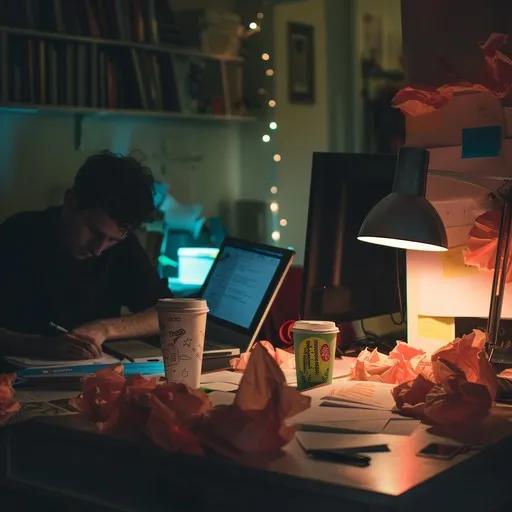
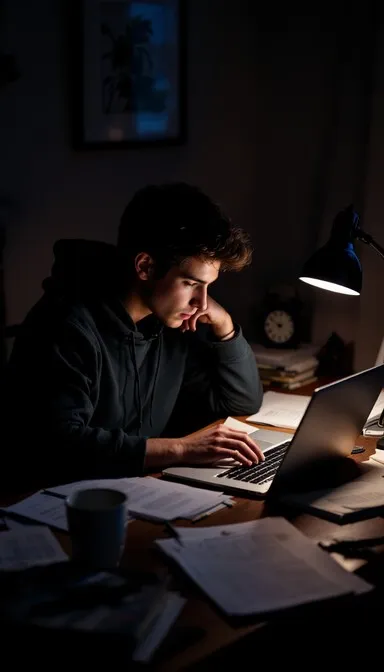
Somewhere on your laptop there is a document you have not opened in weeks. It has a title like 'FINAL_v2_ACTUAL' or, more honestly, 'rubbish_attempt'. It is disorganised, half-argued, patched with [CHECK THIS] and [SOURCE NEEDED]. You are quietly ashamed of it.
We would like to make an unfashionable claim: that document is the single most valuable artefact in your entire dissertation. And the habit of hiding it — waiting until it is 'good enough' before anyone lays eyes on it — is the most common reason otherwise capable postgraduates miss their submission deadlines.
The Perfectionism Trap, Stated Plainly
Perfectionism presents itself as a quality standard. In practice, it functions as a delay mechanism. The student who will not show a supervisor their literature review until it is 'polished' is not protecting standards; they are postponing feedback, and feedback is the only thing that can meaningfully improve the work. The result is a familiar pattern in UK departments every spring: a chapter refined in private for months, submitted to a supervisor in April, returned with structural problems that needed six weeks to fix — with three weeks remaining.
A zero draft shown early and criticised is recoverable. A polished draft shown late and criticised frequently is not.
What a Zero Draft Actually Does
The zero draft — the deliberately ugly first pass, written without editing, without citations perfectly formatted, without elegant transitions — performs three functions no other version can.
First, it converts anxiety into material. A blank page generates dread; a bad page generates decisions. It is far easier to revise a clumsy paragraph than to conjure a good one from nothing.
Second, it exposes the real shape of your argument. Problems you cannot feel while polishing prose — a gap in the logic, a chapter that repeats another — become visible the moment a whole draft exists.
Third, it gives other people something to react to. Supervisors cannot meaningfully comment on a plan forever. They can comment on text.
A Framework for Showing the Ugly Version
The answer is not to broadcast your worst writing indiscriminately. It is to share the zero draft strategically, matched to the right reader at the right moment.
Stage one — the supervisor, in skeleton form. Around the midpoint of your project, send the structure with a paragraph or two under each heading and a frank note: 'This is a rough sketch to check the direction before I develop it.' You are not asking them to mark prose; you are asking them to confirm the architecture. Most UK supervisors respond far better to this than students expect — it is dramatically easier to supervise a rough draft than to chase a silent student.
Stage two — a peer, on one chapter only. Choose a coursemate whose judgement you trust and ask for one specific thing: not proofreading, but whether the argument is followable. Peer exchange works precisely because neither of you is invested in politeness about sentence-level style.
Stage three — a writing consultant, on the whole thing. A professional adviser, such as the consultants we work with at DissertationWriter.uk, is uniquely useful at the zero-draft stage because they assess structure, argument and coherence without the emotional charge a supervisor relationship carries. Telling someone 'this is deliberately rough — I need a structural reading' is a completely legitimate brief, and it is the brief that saves deadlines.
Reframing the Shame
Part of what keeps drafts hidden is the belief that everyone else's first attempts are competent. They are not. Examiners do not see your zero draft; they see what it became. The version that reaches them benefits from every act of early exposure you permitted.
There is also a practical reframing worth adopting: treat the zero draft as a scheduled deliverable, not a private embarrassment. Give it a date, give it a reader, and give yourself permission to write badly on purpose. A dissertation finished on time with visible scars beats a beautiful manuscript that misses the portal deadline by a fortnight.
The file you are ashamed of is not evidence that you are failing. It is evidence that you have started — and starting, shown to the right person at the right time, is the entire game.